Top 10 Tips On Assessing Compliance With The Regulatory Requirements Of PAT in Wolverhampton
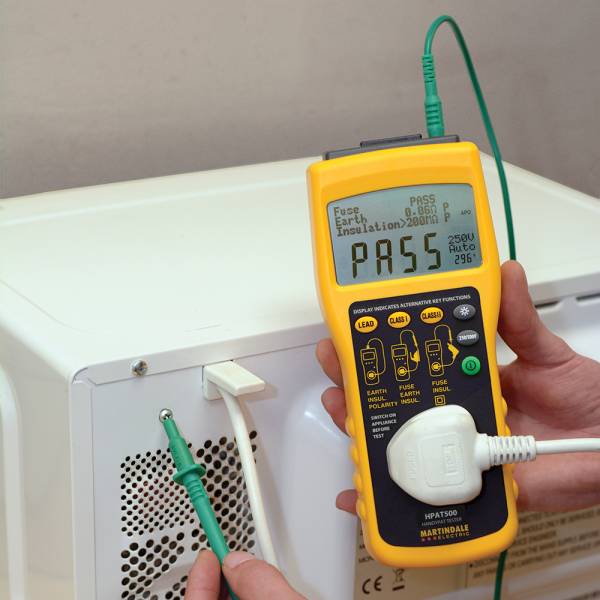
The UK regulatory framework for Portable Appliance Testing is fundamentally distinct from that of fixed electrical installations and fire safety equipment. The PAT is not governed by British Standards or third-party certifications, but rather a more comprehensive health and safety framework. This emphasizes risk assessments and duty of responsibility, as opposed to mandatory periodic testing schedules. Electricity at Work Regulations 1988, which states that electrical equipment must be maintained for safety purposes, is the main legal requirement. However, the Regulations do not specify how this maintenance should be achieved, nor do they mandate a specific testing frequency or methodology. In this case, it is up to the dutyholder to perform a thorough and adequate risk assessment and determine an appropriate inspection and maintenance regime. Compliance, therefore, is not evidenced by a stack of test certificates alone, but by a demonstrable process of risk-based decision-making, competent implementation, and thorough documentation that proves a systematic approach to ensuring electrical safety in the workplace.
1. Electricity at Work Regulations 1988: Legal Foundation
The cornerstone of PAT testing compliance is Regulation 4(2) of the Electricity at Work Regulations 1989, which states: "As may be necessary to prevent danger, all systems shall be maintained so as to prevent, so far as is reasonably practicable, such danger." This places an absolute responsibility on employers to maintain all electrical equipment. The term "systems" includes portable appliances. Importantly, the regulations do NOT mention "PAT Testing"; they mandate "Maintenance," an encompassing concept which includes visual inspections, user checks, combined inspection and testing, as well as a wider concept of maintenance. The frequency and types of maintenance are determined not by a rigid legal schedule, but by the risk assessment.
2. Act 1974: The role of Health and Safety at Work Act 1974
The Health and Safety at Work (etc.) Act 1974 is the overarching legislation which establishes the general duties employers have towards employees and others. The main law that establishes what employers owe to their employees is the 1974 Health and Safety Act. In section 2 of the Act, employers are required to provide, as far as it is reasonable, for the health, safety, and welfare of their employees. This includes providing safe plant and systems of work, which encompasses electrical equipment. Section 3 extends their duty to other people, like visitors, contractors, or members of the general public. The PAT process is the best way to fulfil these duties because it is structured and provides a method for ensuring safety of electrical equipment.
3. Guidance and Best Practice: The IET Code of Practice for In-Service Inspection and Testing of Electrical Equipment
Although not law, the Institution of Engineering and Technology Code of Practice (IET Code of Practice) is universally recognized as the benchmark of best practice for PAT tests. It includes detailed instructions on how to implement a maintenance program that is compliant, including:
Definitions and classifications of appliances.
Details procedures for formal inspections of the product and inspections with testing.
Recommended initial frequencies for inspection and testing based on equipment type and operating environment.
Pass/fail criteria for test results.
Courts and Health and Safety Executive inspectors (HSE), will use this code to judge if a dutyholder’s maintenance regime is “suitable and adequate.” A deviation from the code that is not accompanied by a documented and robust risk-based justification can be interpreted as non-compliance with the regulations.
4. Risk Assessment is the Priority
The HSE explicitly advocates a risk-based approach to PAT testing, moving away from the outdated concept of blanket annual testing for all equipment. The dutyholder is required to carry out a risk assessment before determining the nature and frequency of testing and inspection. A number of factors will influence the assessment.
Equipment type. A Class I appliance, in a workshop or low-risk environment, may require regular formal testing.
Environment: Construction site, warehouses and workshops are environments with high risk. Hotels and offices pose a lower level of risk.
Users: Are equipment users trained staff or members of the public?
How old is the appliance and how often has it been damaged?
This risk assessment defines a conforming system and not by the number of tests that have been conducted.
5. The Concept of "Competence" for Testers
Regulation 16 of 1989's Electricity at Work Regulations requires that those who work with electrical systems have the technical knowledge and expertise to prevent danger. For PAT, "competence", although not a formal qualification is required, must include:
You should have a good understanding of electricity.
Understanding and practical experience of the system on which they are working.
Understanding of the hazards and precautions required.
Ability to correctly operate the test equipment, and interpret the results.
While City & Guilds 2377 is a popular qualification that provides excellent training, competence can be achieved through other means. The dutyholder will need to prove that the tester is competent.
6. Documentation Requirements and Record-Keeping
The Electricity at Work Regulations do not explicitly require record-keeping. The Regulation 29 does state that it can be a defence if you prove that you took all reasonable steps to avoid an offense. Comprehensive records are the primary evidence of due diligence. A compliant record-keeping system should include:
The asset register is a list of all equipment.
The risk assessment and maintenance plan should be documented.
Reports detailing each formal inspection or test. Includes appliance description, test result, pass/fail, next test date, and tester identity.
HSE or the local authorities can easily access these records.
7. Labeling and Identification of Appliances
Labelling is an important part of a PAT system that's compliant. Labelling should include the following information for each appliance that has passed a combined formal inspection and test.
A unique asset ID number that ties it to the record.
The date of the test.
The next date of testing (or reinspection).
The name or identifier used to identify the tester.
The label is a visible indicator that shows users and inspectors the compliance status of an appliance. Labels should be durable, non-metallic, and non-conductive.
8. The HSE Enforcement stance, and "Myth-busting"
The HSE is actively working to dispel misconceptions surrounding PAT tests. The HSE emphasizes that:
The annual testing of all equipment is not a legal requirement.
If a business has qualified staff, it can perform its own testing. It's not required to use a contractor.
Visual inspection is often more important than electronic testing and can identify the majority of faults.
An enforcement officer is likely to look for an approach that takes into account risk. A company that blindly tests all equipment each year without a supporting assessment of risk may be viewed as being less favorable than a firm that can justify the longer testing intervals for low-risk gear through a robust analysis.
9. PUWER: 1998 – Interaction with other Legislation
The Provision and Use of Work Equipment Regulations (PUWER), which was passed in 1998, also apply to portable appliances. PUWER states that all work equipment must be safe, fit for the intended use and maintained in a safe manner. It also requires regular inspections to make sure it is safe. Regulation 6 specifically requires inspections where safety is dependent on installation conditions. PAT tests are a crucial method to meet PUWER's requirements for inspections and maintenance of electrical work equipment.
10. Insurance implications and due diligence
While the law relies on a risk assessment, insurers may have requirements that are specific. As a condition for coverage, a policy might stipulate that a third-party conducts PAT tests annually. If this condition is not met, it could invalidate any claim. Insurance companies and HSE will also scrutinize the dutyholder’s risk assessment and PAT testing records in the event that an electrical incident occurs. A documented, risk-based approach is the best possible proof of due diligence. It also provides a strong defence against prosecution and invalidated insurance claims. Check out the recommended Wolverhampton electrical testing for website advice including electrical fire, extinguisher service, extinguisher inspections, extinguisher service, fire extinguisher extinguisher, extinguisher fire extinguisher, fire extinguisher, electrical fire extinguisher, fire extinguisher testing, fire extinguisher servicing and more..
Top 10 Tips To Increase The Fire Extinguisher Response Times in Wolverhampton
In the contexts of fire safety compliance response time for service is not solely a matter for convenience, but also crucial to maintain constant operational and legal compliance. The Regulatory (Fire Safety) Order of 2005 requires the maintenance of fire-fighting apparatus in a condition which is efficient. Equipment missing, damaged or discarded during this time constitutes a clear breach of this obligation. The ability of the provider to respond to any request whether they are emergency or planned, quickly has an impact on the risks you are exposed to and the legitimacy of your insurance coverage, as well as the stability of your operations. Insufficient responses could leave your premises exposed, disrupt the business process during audits, and demonstrate poor due diligence. To assess a service's capacity to respond to emergencies, from routine scheduling to emergency calls, it's crucial to know the various levels of service, geographical limitations as well as contractual guarantees. operational capacity which enables swift and effective actions.
1. Scheduled Service Appointment Lead Times in Wolverhampton
The ability of the service provider to schedule routine annual services efficiently is a good measure of their proficiency. A well-organized company will typically contact you 4 to 6 weeks before the expiration date of your certificate in order for you schedule your annual appointment. They should have flexible scheduling options and must be able to provide an AM/PM time slot or a date confirmed for the engineer's arrival. In the absence of a confirmed date or excessively long lead times could indicate understaffing and poor management or excessive extension.
2. Definitions and Tiers of Emergency Callout Response
Not all calls to help are created equal. The most reliable providers have clearly defined levels of emergency response with time-bound guarantee. An ordinary urgent request (e.g. an emergency request for a missing or faulty extinguisher) might have a 24-48 hour timeframe for response. Response time for a high-priority situation (e.g. an influx of units released following an incident of a minor nature or a major issue discovered during an audit) typically is much quicker and can be completed within a few hours or even the next day. The service agreement or contract should clearly define the categories of these and their deadlines for responding to expectations effectively.
3. Geographical Coverage and Local Engineer Accessibility in Wolverhampton
Geo-Wolverhampton is directly tied to response times. A multinational company may have a large brand but they rely on local engineers. You must know if there are engineers in your locality or if they travel far. This can affect the time to respond for scheduled services and in emergency situations. A company that has many local engineers is likely to be more responsive and at a lower cost. Ask "Where is the closest engineer near our postcode?"
4. Service Level Agreements Guaranteed Response Times in Wolverhampton
It is essential to verify whether you have a Service Level Agreement (SLA) provides a time frame for response. It is useless to make a vague promise that "we will be there promptly". A robust SLA is backed by tangible Key Performance Indicators. These contractual guarantees will provide you with recourse in case the provider consistently fails to perform their duties.
5. Communications Protocols & Dedicated Helplines in Wolverhampton
The efficiency of communication is essential to speedy response. Establish the provider's protocol to receive and process service requests. Do they offer an exclusive customer support line, or do they have an email address that is specifically reserved for urgent problems? Are they monitored during normal business hours and outside? The top providers offer an immediate phone line to a coordinator, who can dispatch an engineer immediately and without having to wait in a lengthy waiting list. This is crucial in the event of an emergency.
6. Out-of-House and Weekend Support Capability in Wolverhampton
The risk of fire and malfunction is not restricted to 9-to-5 hours. For high-risk environments (e.g., 24/7 data centres, manufacturing or care homes) or after an out of hours incident, being able to reach support is essential. It is important to determine if the company offers a emergency call-out support service that is available 24/7 or if support is restricted to weekday working hours. If they offer out-of hours support, ask them about the charges associated and the time for response. The response time can be quite different from the SLA in the course of the day.
7. Fault Resolution vs. Initial Attendance Time
A critical distinction must be made in the first response time (an engineer on site to determine the cause) and the time for resolution of fault (the point at which the equipment is repaired or replaced completely and compliant). A fire extinguisher could be deemed unfit rapidly by a service provider, however, it may take a few days for replacements to arrive. Your SLA should address both metrics. A provider should strive to resolve common problems such as a misplaced extinguisher on the first visit.
8. Effect of delays in responding on compliance and insurance in Wolverhampton
Understanding the ramifications of slow response is essential. An extinguisher that is defective or not working must be replaced immediately. Otherwise, you will not be in compliance with the Fire Safety Order. This could lead to a Fire Authority audit taking enforcement action. In addition the insurance policy you have is likely to be dependent on compliance with fire safety laws. In the event of a significant delay in addressing an issue could be used by an insurer to invalidate a claim in the event of a fire, arguing that you did not provide sufficient protection.
9. Provider Resource Capacity and Workload Management in Wolverhampton
The ability to respond quickly is a sign of the company's management. Find out their ratio of engineer-to-client and how they manage peak workloads. If a company is overloaded by the demands of its clients will notice their engineers unable to meet the schedules of regular visits. When you tender be sure to inquire about how the vendor can handle an emergency that requires immediate replacement of extinguishers across your premises. Their answer will reveal their capability for large-scale rapid response.
10. Monitoring, reporting and Performance Review in Wolverhampton
Professional providers don't just make promises, they evaluate their performance against these promises. They should have systems that monitor their response times for all kinds of calls. In addition, they should be prepared and willing to submit periodic performance reports, e.g. annual, that demonstrate their adherence with the SLAs stipulated in the contract. This transparency will allow you to conduct an objective examination of their service and hold them accountable in maintaining the highest standards of compliance with fire safety regulations. Take a look at the recommended Wolverhampton fire safety for website recommendations including fire extinguisher inspections, fire extinguisher in electrical fire, electrical extinguisher, extinguisher inspections, fire extinguisher fire extinguisher, fire extinguisher in electrical fire, fire extinguisher in electrical fire, fire extinguisher extinguisher, extinguisher fire extinguisher, fire extinguisher inspections and more. More broadly, read the top emergency light testing for more.
